

 Nederlands
 English
 Deutsch
 Français
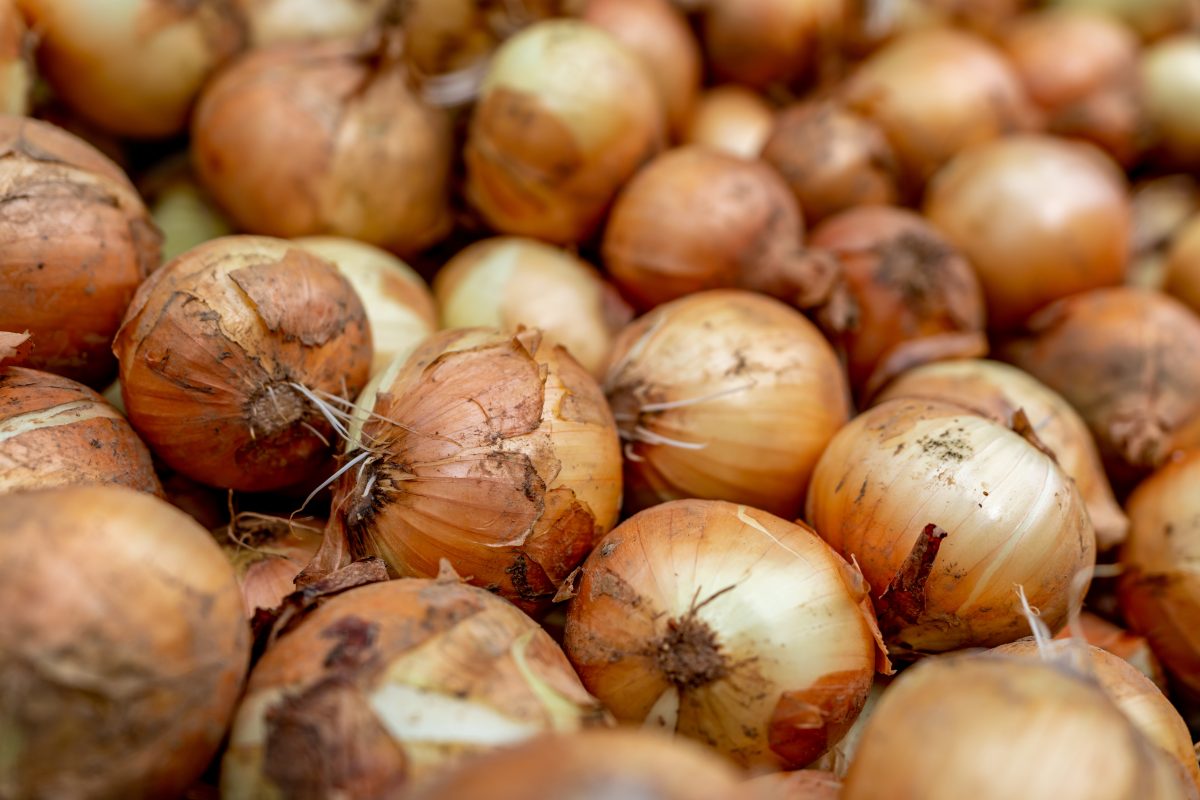
Written on 9 November 2024, by Frank van der Linden (Senior agronomist/storage specialist at Omnivent)
At the start of the storage season each year, we begin with our storage advice. Note: This storage advice is based on conditions in North-West Europe. If you want advice for your region, contact us. The content of this advice has been carefully compiled. However, results may differ with specific conditions of your product and/or defects in storage equipment. Therefore, when in doubt, do not hesitate to contact us.

Check your storage computer before storing
Before you start storing, check that your storage computer is still functioning properly. It is best to always leave your Omnivent storage computer on, but older types such as the ACT-20 can sometimes show a time-out alarm after a long period of inactivity.
Then go to section 00 ACT20 Terminal, page 2 Installation, line 15 Automatic clear timeout alarm, value ‘On’.
Using outside air for cooling and drying
It must be possible to cool and dry with outside air at night, and depending on the product temperature, also during the day. The minimum dew point difference can be set at -1°C, the minimum difference outside-product at -1°C. The lowest dew point difference that is still drying is -0.5°C.
In recent days, the relative humidity (RH) and dew point outside are such that there are sometimes few moments when drying is possible. Remember that using a heater can lower the RH, and therefore the dew point, allowing you to dry sooner and longer.
An additional advantage is that the product temperature does not become too low, which means that drying with outside air can last longer.
If you do not have mechanical cooling, try to lower the product temperature slowly so that you do not reach the final temperature too early. This should not be reached until mid-December.
Dry your onions as quickly as possible
For onions, it is important to dry as quickly as possible. Adhering moisture should be removed. Do this with a ventilation capacity of 100%. Damp soil and rotten bulbs should also be dried as quickly as possible to enable long and problem-free storage.
How are the conditions for storing onions this year?
Mildew
Due to the weather conditions, there is now more downy mildew than normal. An onion that is affected by downy mildew is more susceptible to secondary infection by bacteria or translucent scales. The advice is therefore to regularly check onions in storage by cutting them. The sprout dormancy is also an important point of attention
Conditions were favourable for Neck Rot (the fungus Botrytis aclada) this year. The best way to limit Neck Rot fungus in onions during storage is to dry the crop at 30°C.
Drying costs
Due to the lower prices, growers may be tempted to dry the onions in the field. However, this is not recommended because in practice it has been shown that the drying effect is very limited, while the chance of sun damage and fungal infections increases greatly.
Heating and drying at 30° costs the same amount of energy as a treatment at 20°. This is because a temperature of 30° only needs to be maintained for 3 days, while this process takes 3 weeks at 20°.
Neck rot fungus
If you have detected the neck rot fungus in your batch of onions, you must take special measures. Neck rot fungus grows fastest between 22-25°C. This range must be passed quickly. This can be done by first drying with an inlet temperature of up to 22°C. After a few days, drying can then be continued directly at a temperature of 30°.
Onion storage settings for each storage phase
| To storage Manual control | Adhering moisture must be removed as quickly as possible by means of ventilation. Try to bring the product in as much as possible in 1 day to prevent temperature differences between the batches. Start ventilating with outside air immediately and do not turn off the fans. |
| Warm up | Heat to 20 or 30°C until product is at temperature. Set the end value product to 20 or 30 °C and the maximum duct temperature to 22 or 32 °C. Heating goes faster if the onions are already a little dried. This can be done with outside air, but goes faster with heaters. Limit heating to 2 °C/day. Then continue with “Drying” if the onions are not completely dry yet, see below. |
| Drying/wound healing (ACT) or Intensive drying (Omnicuro) | At 20°C, keep the temperature constant at 20°C for about 3 to 4 weeks. At 30°C, keep the temperature constant at 30°C for about 3 to 4 days. The onions are dry when the air from the onions have an RH of 65-70% at 20°C. |
| After-drying (no desired RH can be set here, but this is possible with Intensive drying) | After-drying period of 4-5 days with an action-pause time of 2 hours action and 2 hours pause. Continue until the product is thoroughly dry. |
| Cooling / storage | Once the product is properly dry (the neck does not roll between the fingers), you can start slowly cooling it. Lower the temperature by 0.5°C/day. If cooling is only possible with outside air, maintain a final temperature of 6°C. Do not try to reach this before mid-December. With mechanical cooling, cooling can be achieved down to 1°C. Use the RV control to set the RV. Use the table below to determine the correct RV. |
Relationship between storage temperature and relative humidity:
| Temperature o C | % RH |
|---|---|
| 25-30 | 65 |
| 20-25 | 65-70 |
| 10-20 | 70-75 |
| 5-10 | 75-80 |
| 0-5 | 80-85 |

Are you unsure about the conditions and the storage of your onions?
The Omnivent representative in your region will provide advice on settings and will be your point of contact for any questions, including questions about cooling. You may already find your answer among the frequently asked questions.
Region UK/Canada/USA
Ronnie Laing
T: +44 (0) 794 006 7458
E: Ronnie.Laing@omnivent.nl
Technical problem / malfunction
Are you experiencing a technical malfunction? That’s unpleasant! Fortunately, we are 24/7 available by phone to help you.
Cooling malfunction: T: (+31)6 – 53 42 14 36
Overige storingen: T:. (+31)6 – 55 14 66 09


